

⏱️ 3–5 minute read
Published by WebCoreShop
Last updated: Feb 2026
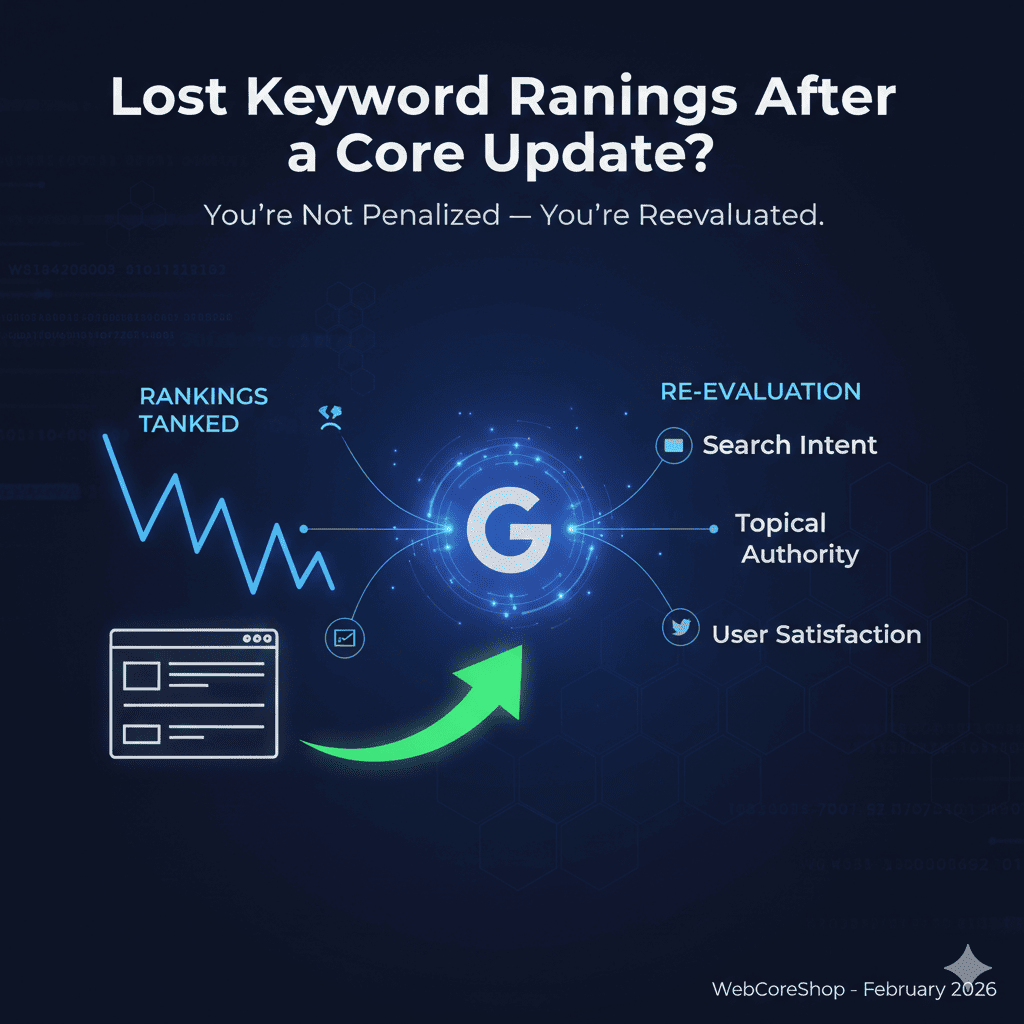
If you’ve lost keyword rankings after a core update, you’re not alone — and it doesn’t automatically mean your site is “penalized.” Many site owners feel like their rankings tanked after a core update, even though nothing obvious was changed. In reality, Google core updates re-evaluate how well individual pages satisfy search intent, not just technical SEO signals.
If you’re unsure whether this is a ranking issue or a traffic issue, it helps to diagnose the difference early. In some cases, rankings drop quietly before traffic follows — which is why early analysis matters. 👉 If you want a second set of eyes on what shifted, you can always discuss your situation directly here:
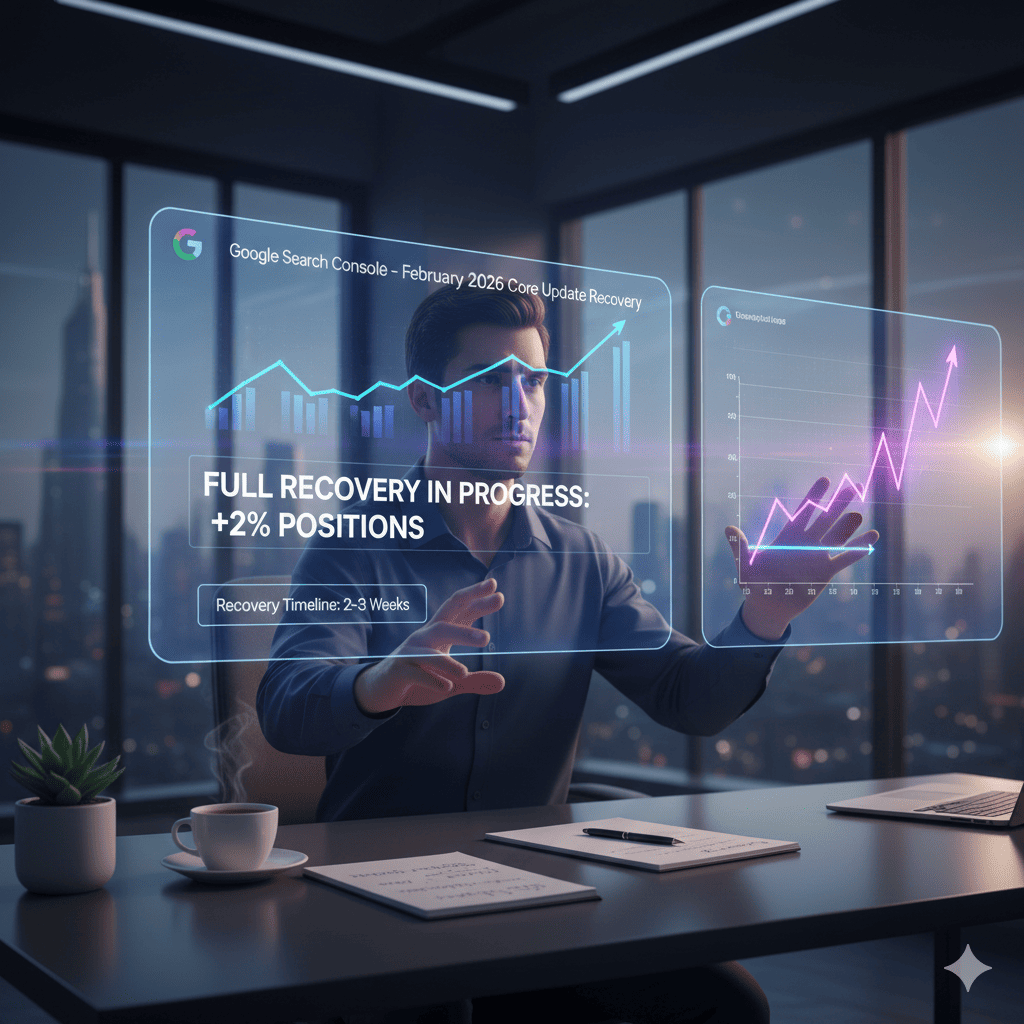
How long does recovery from the February 2026 Core Update take?
Recovery from a Google core update is rarely overnight. According to early data from the February 2026 update, initial ranking fluctuations typically settle within 2 to 3 weeks as the rollout completes.
However, a “full recovery” depends on when Google’s systems re-evaluate your site’s quality signals. If you make significant content improvements today, you may see positive movement in 14–21 days, but for many sites, a complete return to previous levels occurs during the next incremental update or when the current rollout finishes its “re-weighting” phase.
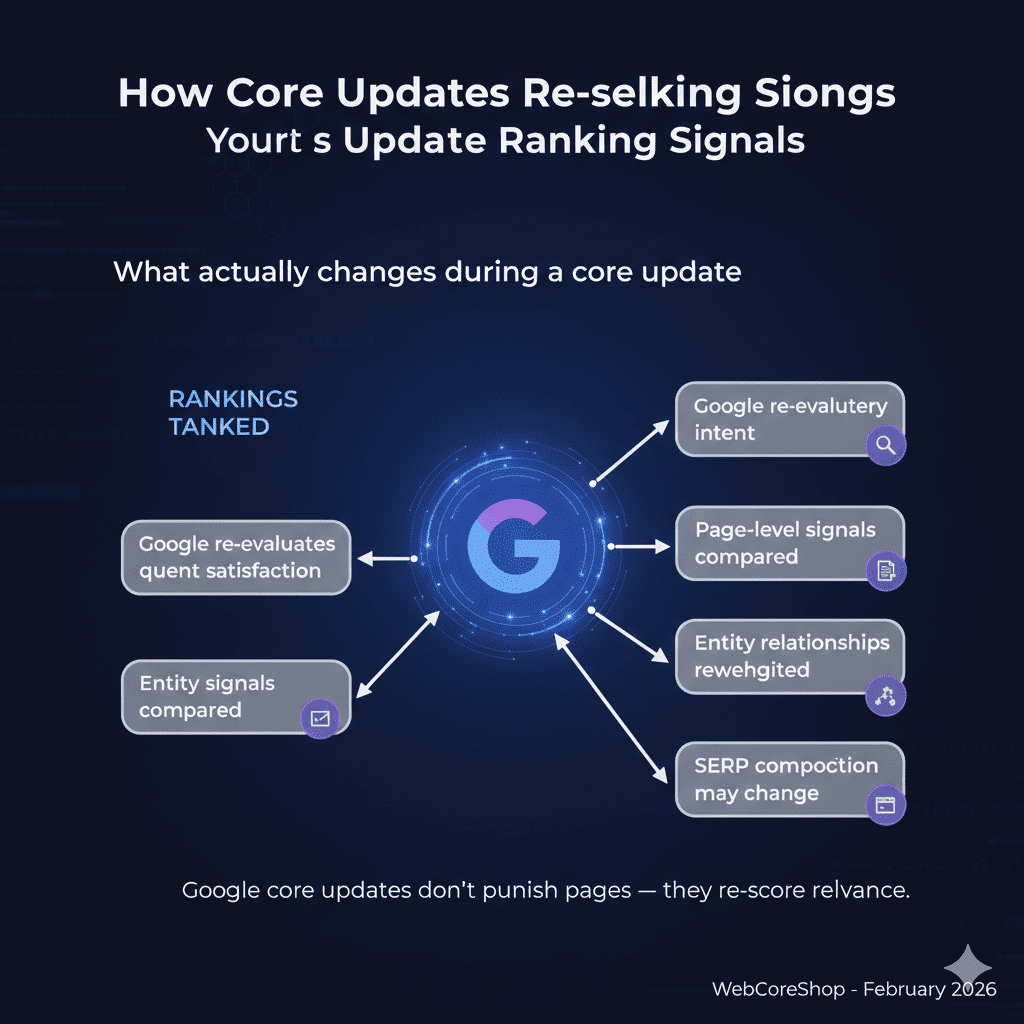
How Core Updates Re-score Ranking Signals
Google replaces pages when competitors satisfy intent more precisely, not because your site is penalized.
What actually changes during a core update
Google re-evaluates query intent satisfaction
Page-level signals are compared again against competitors
Entity relationships and topical depth are reweighted
SERP composition may change (new formats, new competitors)
This explains why a google core update ranking drop can happen even when your content is technically sound.
If your concern is primarily about traffic decline rather than position loss, you may want to review this related breakdown on 🔗 why sites lose traffic after core updates
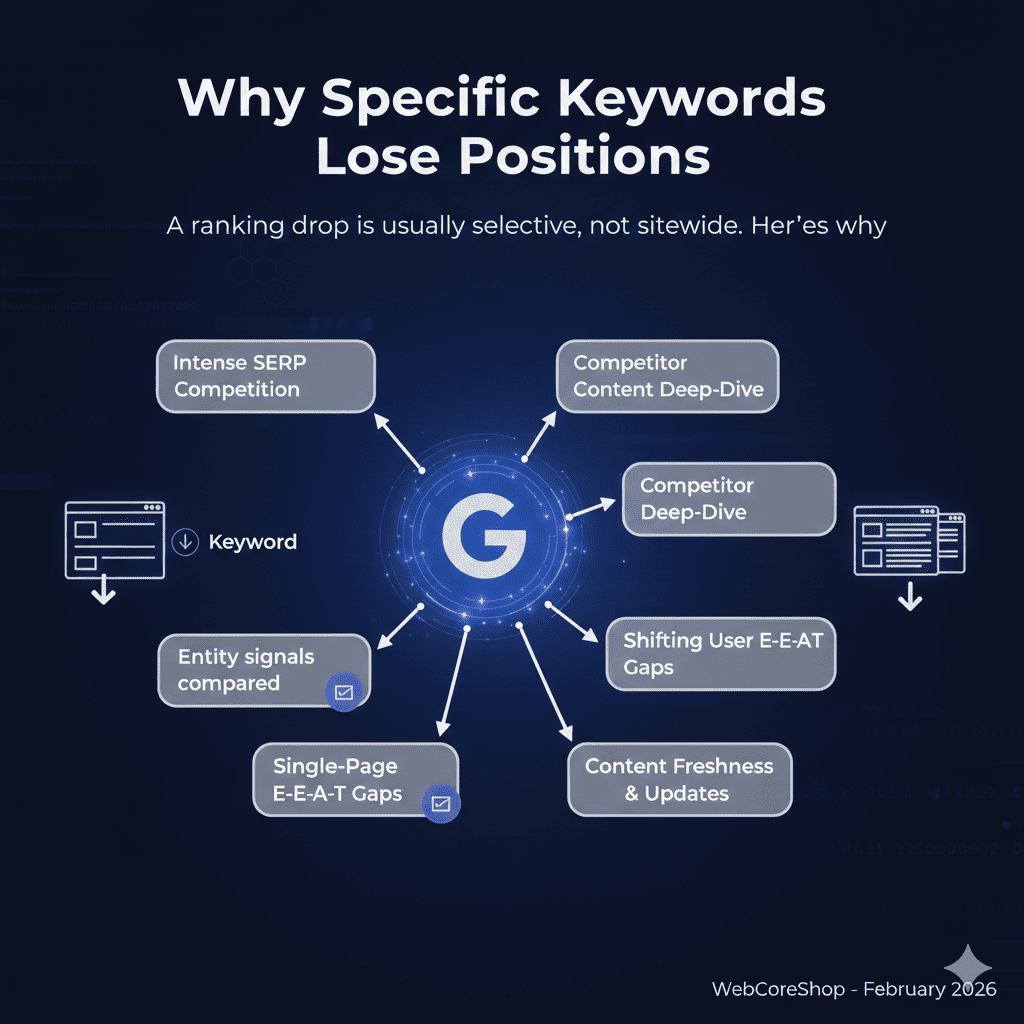
Why Specific Keywords Lose Positions
A ranking drop is usually selective, not sitewide. Here’s why.
At the entity level, Google prioritizes pages that clearly define the primary topic while supporting it with closely related concepts.
1. Intent mismatch
Your page may still be high quality — but no longer the best match for how users search today. When rankings dropped after a core update, intent drift is often the primary cause.
2. Entity & topical gaps
Google increasingly favors pages that clearly demonstrate:
Entity relationships
Contextual depth
Topical completeness
If competitors now cover related subtopics better, your page may lose relevance.
3. Competitor re-scoring
Sometimes nothing is “wrong” with your page — others simply improved. This is a common cause when keyword rankings dropped after a Google update without technical changes.
If rankings fell after a Google update and you’re unsure whether the issue is intent or authority, a structured diagnosis helps —👉 feel free to talk it through here
How to Recover Rankings After a Google Core Update
Ranking Recovery Checklist (Core Update Focus)
Before making changes, confirm:
The page still matches dominant SERP intent
Competing pages cover broader or deeper subtopics
The page demonstrates clear topical authority
Content structure supports skimming and clarity
Supporting internal links reinforce relevance
The R.E.A.L. Ranking Recovery Model
Relevance: Does the page still match the query’s dominant intent?
Entities: Are core and supporting entities clearly covered?
Authority: Does the page demonstrate topical depth?
Layout: Is the structure optimized for comprehension?
This is where recovery actually happens — not with quick fixes, but with alignment.
Query Intent Realignment
Ask:
What problem is the searcher trying to solve now?
Has the SERP shifted toward guides, comparisons, or explanations?
Updating sections, examples, and framing is often enough to recover visibility when rankings fell after Google updates.
Entity & Topical Authority Gaps
Strengthen:
Related concepts
Supporting subtopics
Clear internal connections
Your goal is to help Google understand what your page is about in context, not just keywords.
Page-Level Signal Reinforcement
Reinforce:
Clarity
Structure
Engagement
If your site also experienced traffic decline alongside ranking changes, this guide on 🔗 diagnosing and fixing traffic loss after a core update may be relevant:
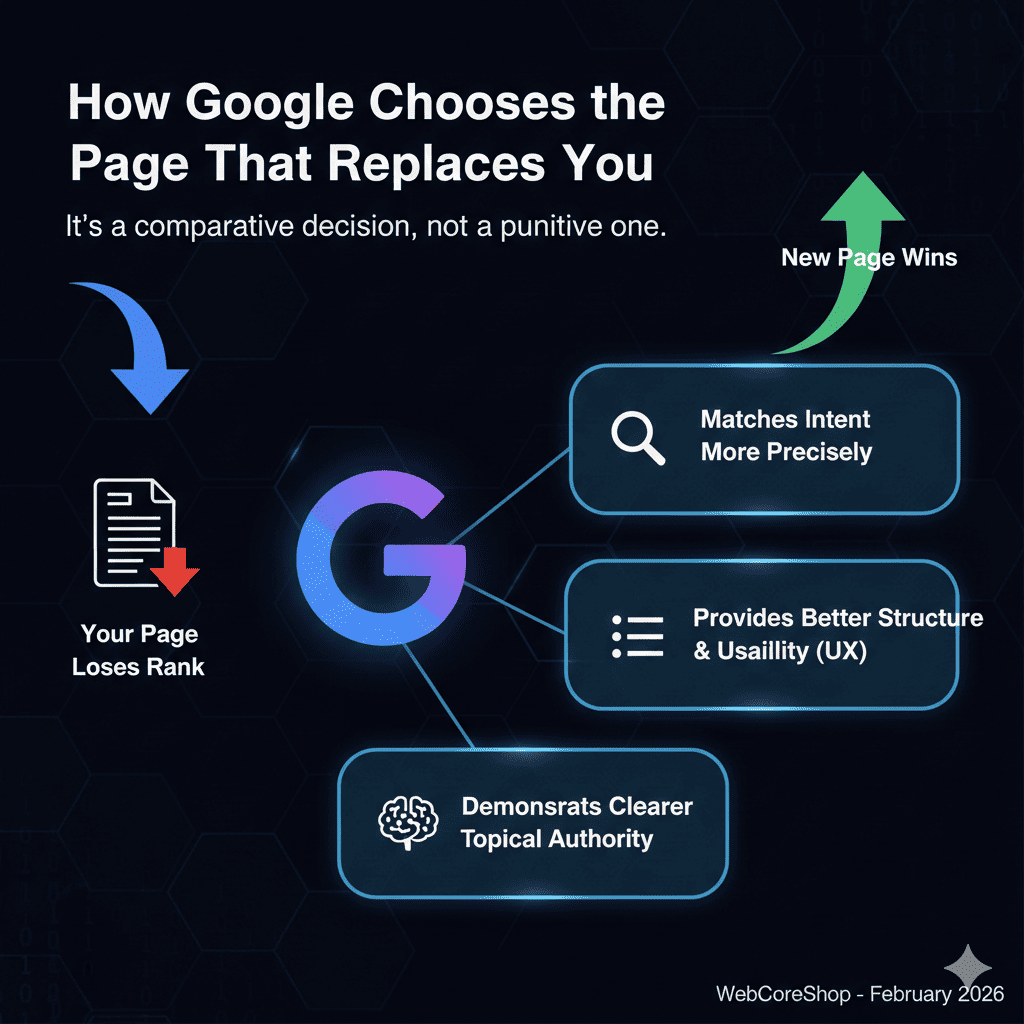
How Google Chooses the Page That Replaces You
Google doesn’t demote pages — it promotes alternatives that satisfy updated relevance models more precisely.
When Google replaces your page, it’s usually because another page:
Matches intent more precisely
Demonstrates clearer topical authority
Provides better structure or usability
Understanding why that page won is often the fastest way to recover rankings — and this is where many site owners get stuck without outside analysis.
E-E-A-T Signals That Influence Ranking Recovery
Experience
First-hand insights, examples, and practical guidance matter more than generic explanations.
In recovery analysis, ranking losses are most often tied to intent shifts or entity gaps — not technical penalties.
Expertise
Depth beats breadth. Pages that demonstrate clear subject mastery tend to rebound faster.
Trust
Transparency, clarity, and consistency across your site reinforce long-term recovery.
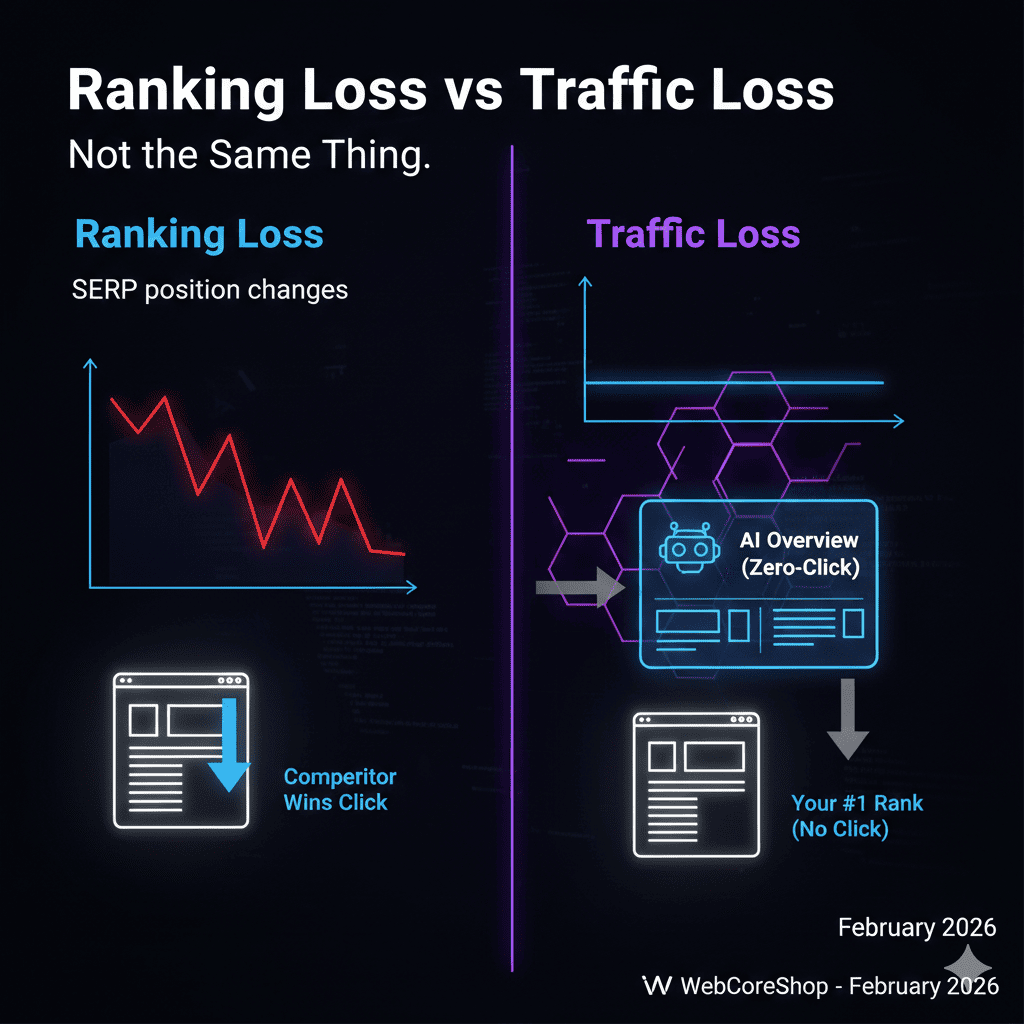
Ranking Loss vs Traffic Loss
Ranking loss and traffic loss are not the same thing.
Ranking loss = SERP position changes
Traffic loss = visit decline (which may happen later)
Understanding this distinction prevents misdiagnosis. For a broader recovery framework, 🔗 this pillar guide explains how Google evaluates sites during major updates
Need Help Recovering Rankings After a Core Update?
If your rankings dropped after a core update and you’re not sure what to fix first, a focused diagnosis can save months of trial and error. Whether you need confirmation or a recovery roadmap,👉 you can discuss your case directly here — no pressure, just clarity
This page focuses specifically on ranking position changes, while related guides address traffic loss and broader recovery strategy.
FAQ (AI & SERP Optimized)
Why did my rankings drop after Google core update?
Because competitors better satisfied Google’s updated quality signals.
Is ranking drop normal after core update?
Yes — but persistent drops indicate authority or intent gaps.
How do I recover rankings after Google core update?
By improving topical authority, intent alignment, trust, and UX.
When rankings drop after a core update, inaction is also a decision — and it often delays recovery until the next update cycle.